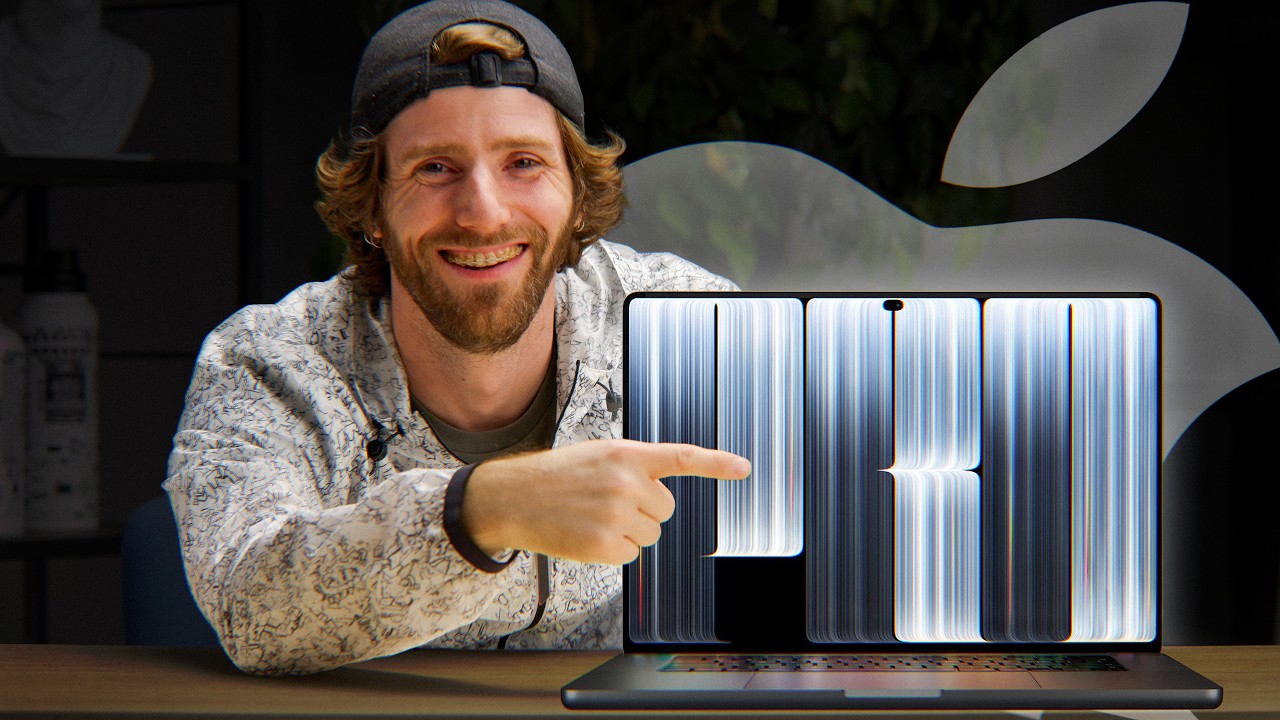
Linus was Right - Apple (probably)
Linus Tech Tips
560,192 views • 15 hours ago Save 7 min 4 min read
Video Summary
Apple has unveiled its first touchscreen Mac, the MacBook Pro with ProLED, featuring a stunning tandem OLED display that achieves 1,000 nits sustained and 2,000 nits peak brightness. This new model boasts a ProMotion variable refresh rate, full Adobe RGB and 80% REC 2020 color space coverage, and even a DICOM reference mode for medical imaging. The integration of touch sensors directly into the display panel, rather than layering them, is a key innovation. However, the transition to a touch-enabled macOS raises questions about user adoption, despite Apple's efforts to make the interface more iPhone-like. The new MacBook Pro starts at a hefty $2,900 and includes the M5 Pro and Max chips, with the iPad mini also receiving an OLED screen and an A20 Pro chip, though some models feature a less powerful variant.
Short Highlights
- Apple introduces its first touchscreen Mac, the MacBook Pro with ProLED.
- The ProLED display features tandem OLED technology with up to 2,000 nits peak brightness and ProMotion.
- Touch sensors are integrated directly into the display panel for a seamless experience.
- macOS is adapting to touch, with UI elements becoming more iPhone-like.
- The new MacBook Pro starts at $2,900 and uses M5 Pro and Max chips.
- The iPad mini also gets an OLED screen and A20 Pro chip, with varied CPU core counts by storage size.
- Base model MacBook Pros and iMacs now feature the M6 chip.
Key Details
Apple's First Touchscreen Mac: MacBook Pro with ProLED [0:00]
- Apple has announced the MacBook Pro with ProLED, marking their first touchscreen Mac.
- The new display is a tandem OLED panel named ProLED XDR, offering 1,000 nits sustained and up to 2,000 nits peak brightness.
- It features ProMotion with a variable refresh rate from 10 to 120 Hz and covers the DCI-P3, Adobe RGB, and 80% of REC 2020 color spaces.
"Wow, way to go, Apple. You did it. You finally caught up."
Display Technology and Calibration [0:59]
- The ProLED XDR screen is a tandem OLED panel with advanced brightness and color capabilities.
- Apple published a white paper detailing its suitability for professional content creation, including film mastering.
- Similar to the Studio Display XDR, it includes a DICOM reference mode for medical imaging.
"And like the Studio Display XDR, it can even be used for medical imaging with a DICOM reference mode built in."
Touch Integration and User Interface [2:05]
- The MacBook Pro now features a touchscreen, with touch sensors integrated directly into the display panel.
- macOS is evolving with more iPhone-like elements, such as the Dynamic Island for the webcam and Spotlight Search.
- The context menu adapts spacing based on whether it's clicked with a mouse or touched.
"It's these little touches, pun intended, that could give macOS with touch a leg up over Windows."
Internal Upgrades and Design Changes [4:20]
- The new MacBook Pro models are powered by the M5 Pro and Max chips, with improved thermal management.
- Battery life remains similar, rated for 22 to 24 hours.
- The laptops are roughly half a pound lighter and a few millimeters thinner than previous non-OLED models, with deeper bass in the speakers.
"Inside, the new MacBook ProLED is using the M5 Pro and Max chips, which is a little disappointing now that the M6 exists."
iPad Mini and Other Updates [6:48]
- A new iPad mini is introduced with an OLED screen and an IP67 rating.
- It is powered by the A20 Pro chip, though 128GB and 256GB models use a variant with five CPU cores instead of six.
- Base model MacBook Pros and iMacs now feature the M6 chip, retaining previous price increases.
"And inside the 14% thinner chassis is the A20 Pro chip that we absolutely loved in our iPhone 18 Pro review."