The Power of Reinvention: Switching Things Up at Any Age
Mel Robbins
229,964 views • yesterday Save 39 min 15 min read
Video Summary
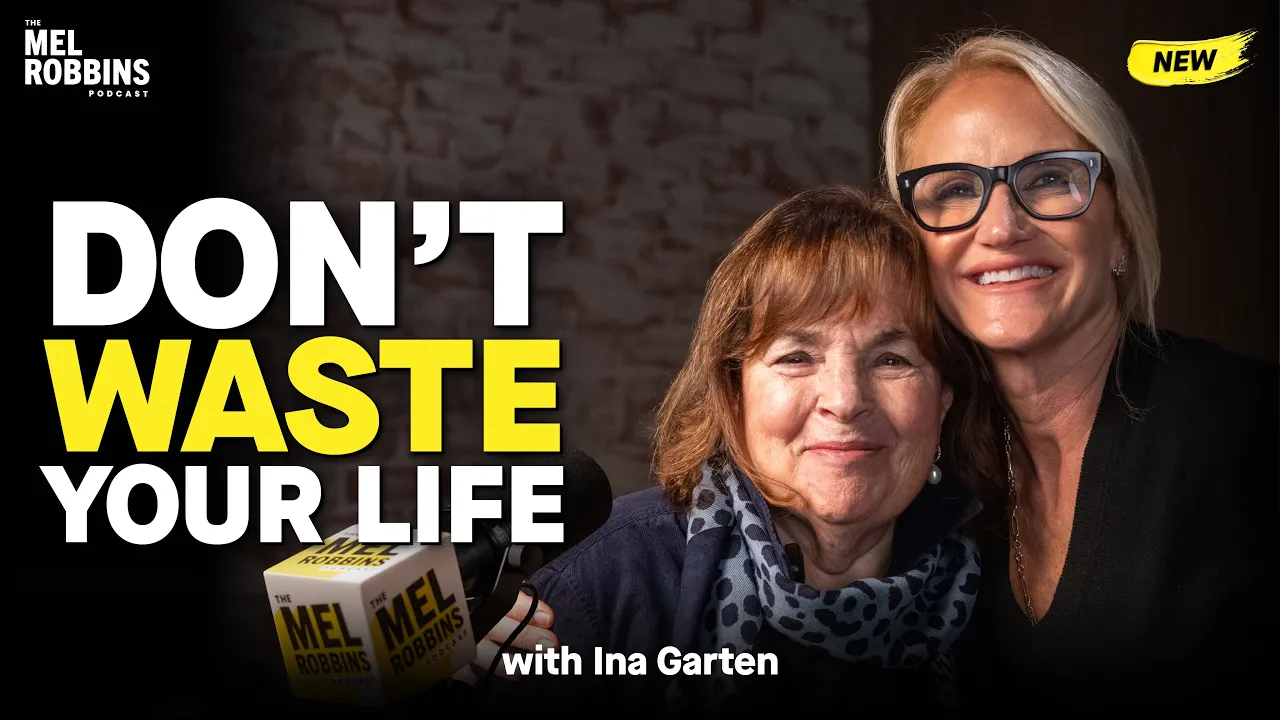
Ina Garten, the beloved Barefoot Contessa, shares the surprising journey that led her from a career in nuclear energy policy at the White House to becoming a culinary icon. Garten reveals that her pivotal moment came at age 30 when, feeling stifled by a bureaucratic government job, she stumbled upon an advertisement for a specialty food store. Despite having no prior business or food industry experience, and living hours away, she impulsively decided to pursue it, guided by the mantra, "Do what you think is fun. If it's fun, you'll be really good at it."
Her transition was far from smooth, marked by initial financial struggles, a bizarre rental situation, and the sheer physical demands of running the store. Garten recounts how early experiments with "fancy" food failed, while simple dishes like roast chicken sold out instantly, teaching her a crucial lesson about what people truly want at home. This experience, along with her willingness to "jump in the pond" and learn through doing, ultimately informed her successful approach to business, cooking, and life, emphasizing that taking calculated risks and embracing the unknown are key to reinvention and fulfillment.
Short Highlights
- Embrace the "Fun Factor" for Career Success: Garten's core philosophy is to pursue activities that are genuinely enjoyable, as passion fuels excellence and fulfillment.
- The Power of Deliberate Decisions: Actively choosing a path aligned with personal interests, rather than passively following life's course, is crucial for agency and control.
- From Bureaucracy to Bakery: A pivotal moment at age 30, driven by a low threshold for boredom, led Garten to leave a White House job for a specialty food store, embracing uncertainty.
- Experimentation is Key: Whether in science or cooking, testing ideas and learning from what works (and what doesn't) is essential for innovation and understanding customer desires.
- "Jump in the Pond" Mentality: Overcome fear of the unknown by taking action, even when uncertain, as experience reveals the path forward.
- Reframing Challenges: Difficult tasks can be endured by viewing them as necessary steps in furtherance of enjoyable pursuits.
- It's Never Too Late to Reinvent: Age is not a barrier to starting anew; focus on what you love and find a way to build a business around it.
Key Details
From Bureaucracy to Business 00:00
- Ina Garten, known as the Barefoot Contessa, discusses her four-decade career teaching cooking and her philosophy: "Do what you think is fun. If it's fun, you'll be really good at it."
- She emphasizes the importance of making deliberate decisions in furtherance of what one loves to do, asserting that this agency is vital for controlling one's life.
"This is what I want to do, and if somebody wants to try and stop me, knock yourself out. It's not going to happen."
The White House and a "Low Threshold for Boredom" 00:00
- Garten's memoir, "Be Ready When the Luck Happens," details her life before culinary fame, including her time at the Office of Management and Budget at the White House, working on nuclear energy policy.
- At 30, feeling bored and unfulfilled, she realized her "low threshold for boredom" made her willing to take risks to escape her bureaucratic job.
- She desired to "be the process" rather than just part of it, aiming to do her own thing in real estate or the food business.
"There has to be something more fun than this. The only good thing about having a low threshold for boredom is that I've always been willing to take crazy risks just to get out of that miserable state."
A Moment of Clarity in the New York Times 00:00
- While working at the Office of Management and Budget in the 1970s, Garten felt her hard work yielded no tangible results or change.
- She discovered the business opportunity section in the New York Times, which advertised businesses for sale.
- An ad for a specialty food store in a town she'd never visited caught her eye, sparking a desire for something more fun.
"And I thought, God, that sounds like fun. That was the moment? That was the moment, yeah."
"Do What You Think Is Fun" 00:00
- Garten shared her feelings of boredom and desire for change with her husband, Jeffrey, who advised her, "Do what you think is fun. If it's fun, you'll be really good at it."
- This advice resonated deeply, encouraging her to pursue activities driven by intrinsic enjoyment rather than societal expectations.
- She recalled organizing neighborhood kids as a fun childhood activity, highlighting the importance of pursuing what feels natural before external "shoulds" take over.
"Do what you think is fun. If it's fun, you'll be really good at it."
The Tiny Store in Westhampton 00:00
- Jeffrey, initially humoring her, agreed to look at the specialty food store in Westhampton, a place they had never visited.
- Upon arriving in April, Westhampton was a quiet beach town, but the small, 400-square-foot store was open and baking chocolate chip cookies.
- Walking into the store, Garten felt an immediate sense of belonging and excitement, despite knowing nothing about the food business.
"And I walked in, and they were baking chocolate chip cookies. And I thought, okay, this is where I want to be. I don't know anything about it, but I'm going to figure it out."
A Leap of Faith 00:00
- The decision to buy the store involved a significant drive from Washington D.C., no prior business ownership experience, and a husband who initially thought he was just indulging a whim.
- Garten recognized this moment as a "golden moment"—an unexpected opportunity that could change her life's trajectory if followed.
- She embraced the irrationality of the decision, prioritizing moving towards something fun over staying in a disliked situation.
"It doesn't have to be rational. It just has to be, I'm leaving something I don't like, and I'm going towards something that sounds like it would be really fun to do."
Science, Food, and Experimentation 00:00
- Garten draws parallels between her government work in policy and cooking, viewing both as forms of science and experimentation.
- She notes that the difference between nuclear energy policy and running a food store is minimal in terms of the underlying process of testing and creating.
- The outcome, however, is vastly different: roast chicken versus gibberellic acid.
"I think cooking is science. And when I was a kid, I was a science nerd. I loved science."
Connecting the Dots: Past Skills, Future Business 00:00
- Garten realized that skills acquired during her government career, such as learning to cook, renovating houses, and negotiating loans, had prepared her for entrepreneurship.
- She hadn't recognized these connections until writing her memoir, understanding that seemingly unrelated experiences contribute to future endeavors.
- The specialty food store became a place where she could integrate everything she loved: borrowing, building, and cooking.
"And only when I wrote the memoir did I realize that when I was in Washington, because I didn't find my job that exciting, I taught myself how to cook, I would buy old houses and renovate them and sell them."
The First Month: Learning on the Job 00:00
- After purchasing the store, Garten wisely arranged for the seller to stay for a month to teach her the essentials of running the business.
- She lacked basic knowledge, from operating the cash register to baking on a large scale.
- The initial week was overwhelming, leading her to tell Jeffrey, "This is the stupidest thing I've ever done in my life."
"I bought it, but I made a deal with the seller that she would stay for a month and teach me what I need to know because I didn't know anything."
A Rental Mishap and a Shared Solution 00:00
- To manage the store, Garten rented a house in Westhampton but discovered upon arrival that the owner had double-booked it.
- Facing a shortage of rentals before Memorial Day weekend, she proposed renting the house with the other family.
- This unexpected arrangement worked out, highlighting her ability to adapt and find solutions.
"So we actually decided, I said to them, okay, well, I'm not going to be here very much because I'm running a specialty food store and my husband lives in Washington. So maybe we could just rent it together."
The Grind of the Early Days 00:00
- Garten describes the intense physical labor involved, starting her days at 5 a.m. to prepare for the store's opening.
- During the first Memorial Day weekend, the store was completely sold out by Friday evening, forcing them to buy ingredients from a grocery store and bake through the night.
- Despite the exhaustion, she found the work fun, engaging, and challenging, planning to refine operations during the quieter winter months.
"I would get to the store at five o'clock in the morning and I would make sure everything was organized for the chef and the front of the house."
Doubts and a Glimmer of Hope 00:00
- Before the busy weekend, Jeffrey used a calculator to project the store's meager earnings based on the first day's gross ($87) and expressed doubt about its viability.
- However, the overwhelming success of Memorial Day weekend, with the store being completely cleaned out, provided a strong indication of its potential.
- This turnaround shifted Garten's perspective, making her realize there might be significant promise in the business.
"And Jeffrey had a calculator and he multiplied 87 times the number of days in the summer. And he said, I don't think you're going to make it here."
Working Through Fear 00:00
- Garten advocates for "working scared," likening the process to jumping into a pond without knowing its depth or temperature.
- She believes that hesitation and overthinking prevent people from taking necessary risks and discovering new possibilities.
- The advice "Go as far as you can see, and when you get there, you'll be able to see farther" underscores the importance of taking action without needing a complete roadmap.
"You've got to jump in the pond, splash around, see what it is, and figure out what to do about it."
The "If It's Not Fun, It's Not Done" Philosophy 00:00
- Garten lives by the principle, "If it's not fun, it's not done," clarifying that this means activities are either inherently fun or serve the purpose of enabling fun.
- She acknowledges that even enjoyable pursuits involve less enjoyable tasks, like managing business operations, but these are undertaken in furtherance of the creative and fun aspects.
- This reframing gives meaning to necessary but less exciting tasks, connecting them to the ultimate goal of enjoyable work.
"It just means it's either fun on its own or it's in the furtherance of fun."
Finding Your Own Track 00:00
- Garten recognized that as a woman in the 1970s government, she likely wouldn't reach the highest positions, prompting her to create an "alternate track" for herself.
- This track would be limited only by her own talent and drive, giving her full control over her career progression.
- She emphasizes that ultimately, individuals are responsible for their own success and opportunities.
"And I thought, I need an alternate track that's mine, where the only thing that will limit me is my own talent and my own drive."
The Gold Necklace and Shifting Perceptions 00:00
- To assert her ownership of the store, Garten bought a large gold necklace, following the seller's advice to wear jewelry that signaled her authority.
- This non-verbal cue changed customer interactions, shifting the dynamic from demanding to acknowledging her as the owner.
- It demonstrated how changing one's own presentation can alter conversations and relationships.
"So I walked across the street to a jewelry store, and I bought what I thought was the gaudiest, biggest gold necklace I've ever seen in my life."
Fancy Food vs. Simple Comforts 00:00
- Initially, Garten tried making elaborate dishes like veal with morels, which did not sell well in the Hamptons.
- She discovered that customers preferred simple, comforting foods like roast chicken and lobster salad for home dining, while seeking fancy meals when dining out.
- By repackaging roast chicken in a more casual, picnic-style manner, it sold out within minutes, revealing a key insight into customer preferences.
"And I thought, oh, people have elegant tastes, but they don't want fancy food at home. They want to go out for something fancy."
The Granola Epiphany 00:00
- Garten experimented with merchandising various items in drawers beneath display tables, including cookies and muffins, none of which sold.
- When she stocked granola, it sold exceptionally well, leading her to understand that customers often sought healthier options alongside decadent treats.
- This underscored the importance of continuous experimentation and not assuming one knows the outcome in advance.
"And then one time I ordered a lot of granola. And it just flew out of the store."
The Bakery Experiment: A Lesson Learned 00:00
- Inspired by Garten's displays, a listener recounts trying to own a bakery after hating her corporate law job.
- After working weekends at a bakery, she realized she enjoyed the idea of a beautiful bakery but lacked the desire for the demanding day-to-day operations.
- This experience taught her to experiment and discover what she truly wanted, even if it meant realizing a dream wasn't the right fit.
"Here's the epiphany because this relates back to what you were saying. You don't have to see all the way. Go as far as you can see."
Embracing the "Cage with the Door Wide Open" 00:00
- Garten reflects on the George Lucas quote, "We're all living in cages with the door wide open," realizing she had the power and responsibility to set herself free.
- This involves believing in one's choices and stepping out of self-imposed limitations based on past experiences.
- Exercising this power, she advises, means asking for what you want, even if the answer might be no, or better yet, creating it yourself.
"We're all living in cages with the door wide open. That was me until I realized I had the power and the responsibility to set myself free."
The Decision to Sell the Store 00:00
- After years of running the store, including managing two locations and catering simultaneously, Garten felt exhausted and that the work was no longer exciting or challenging.
- She decided it was time for something new and sought to sell the business.
- She sold the store to her chef and manager, financing the sale herself.
"I can't do this one more day. I don't want to smell like carrot muffers and a granola anymore, people. I'm out of here."
A Year of Transition and a New Path 00:00
- The year following the sale of her store was the most challenging and scariest transition of her life, marked by a lack of purpose.
- Jeffrey encouraged her to consider other ways to engage with the food business, leading her to explore cookbook writing.
- Initially hesitant about the solitary nature of writing, she submitted a proposal, which was accepted, pushing her into a new career.
"And he said to me, you know, you love the food business. Why don't you think of a different way to do the food business other than running a specialty food store?"
The "Barefoot Contessa Cookbook" Formula 00:00
- Garten's approach to cookbook writing was to create the book she wanted to write, focusing on simple, reliable recipes with accessible ingredients and beautiful photography.
- This strategy resonated with readers, establishing her unique voice and style.
- She emphasizes staying true to one's vision rather than conforming to market expectations.
"I'm not going to write the cookbook that sells. I'm not going to write the cookbook other people think I should write."
Marriage, Independence, and Rekindling Connection 00:00
- Garten reflects on a period of marital strain caused by her intense focus on the store and living separately from Jeffrey.
- She initiated a difficult conversation, expressing her need to be on her own, which Jeffrey supported with empathy.
- This separation, though painful, allowed her to discover herself and ultimately led to a stronger, more equitable partnership upon their reconnection.
"I told him that I needed to be on my own. I didn't say whether it was for now or forever. I didn't know."
Learning About Each Other in Stressful Times 00:00
- Garten highlights that true understanding of a partner emerges during times of stress and challenge, not during smooth sailing.
- Her period of living alone in New York, feeling lost and without friends, was a difficult but crucial time for self-discovery.
- Jeffrey's supportive calls and invitation to stay at their house while he traveled provided the space she needed to figure things out.
"It's in times of stress that you find out who the other person really is."
Finding Joy in the Journey 00:00
- Garten's parting words emphasize the importance of having fun in life, stating, "If you're not having fun, what in the world is the point of it?"
- She encourages listeners to pursue what they love and find ways to make a living from their passions, reminding them that they have the power to create a fulfilling life.
- Her ultimate hope is that people remember her as someone who "had a very good time."
"We only have one trip around this merry-go-round, and if you're not having fun, what in the world is the point of it?"
A New Chapter: Podcast and Simpler Recipes 00:00
- Garten reveals she has recently started a podcast called "Happy Hour," where she chats with guests over cocktails.
- She also has a new cookbook coming out, featuring even simpler recipes designed to save time for entertaining friends.
- One dessert recipe suggests buying a cheesecake from a bakery and making a fresh raspberry sauce, embodying her philosophy of accessible, enjoyable cooking.
"And what I found is I kept making simpler and simpler recipes because I wanted to cook for friends, but, you know, it takes time."