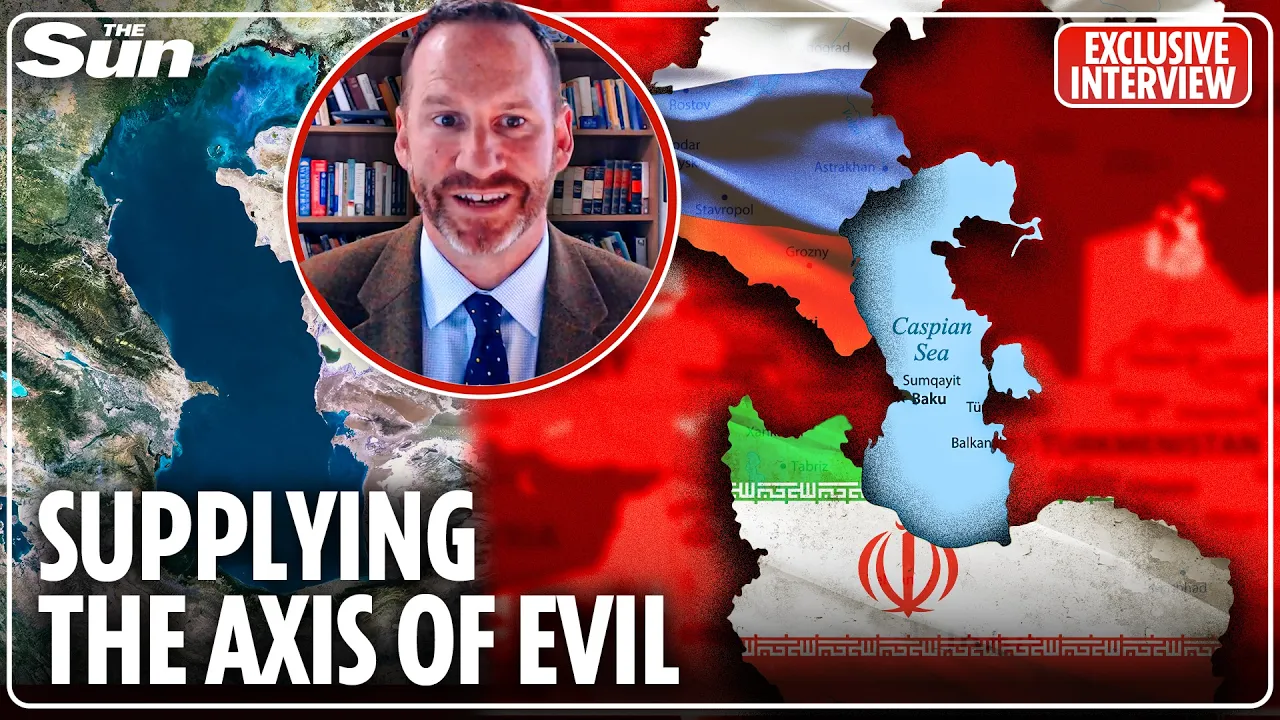
How Iran & Russia use the Caspian Sea to deliver arms to each other
The Sun
1,002 views • 22 hours ago Save 6 min 4 min read
Video Summary
Ukraine and Israel are escalating their conflicts into the Caspian Sea, striking Russian and Iranian naval assets and cargo ships. This intervention is significantly degrading Russia's Caspian flotilla, with over 40% of its ships reportedly hit. Meanwhile, Iran and Russia are increasingly using the Caspian for trade and military resupply, circumventing international sanctions and symbolically linking the wars in Ukraine and the Middle East.
This strategic waterway is also becoming a hub for a growing axis against Western interests, exemplified by a factory in Tatarstan producing Iranian-designed drones with Chinese components and North Korean labor. Western nations are urged to bolster the maritime capabilities of regional partners like Azerbaijan, rather than expecting direct intervention, to counter these emerging threats.
Short Highlights
- The Caspian Sea has become a new theater of conflict, linking the wars in Ukraine and the Middle East.
- Ukraine and Israel have significantly degraded Russia's Caspian flotilla and Iranian naval assets.
- Iran and Russia are using the Caspian to circumvent sanctions and for military resupply.
- A factory in Tatarstan is producing Iranian-designed drones with components from China and labor from North Korea.
- Western nations are advised to build maritime capabilities of regional partners rather than direct intervention.
- Declining water levels in the Caspian Sea pose future challenges for Russian naval bases and regional security.
Related Video Summary
Key Details
Caspian Sea: A Strategic Nexus [0:00]
- The Caspian Sea's central location makes it strategically important.
- Iran is using the sea to trade with and receive assistance from Russia, circumventing sanctions.
- This cooperation symbolically links the wars in Ukraine and the Middle East.
"And what it does is at least symbolically, if not also practically, it joins up the two major wars of today, the war with Iran and the war in Ukraine."
Iran-Russia Sanctions Evasion [0:41]
- Iran and Russia have a history of using the Caspian to bypass sanctions.
- Early Iranian drones for Russia were delivered via the Caspian Sea during the invasion of Ukraine.
- Russia utilizes the Volgadon Canal and extensive rail/road networks connecting its Caspian ports.
"So they've been doing this a lot in recent weeks, but this is really nothing new."
Shifting Naval Power Dynamics [3:44]
- Ukraine and Israel have impacted Russian and Iranian naval capabilities in the Caspian.
- Ukraine has targeted Russian vessels and cargo ships suspected of transporting goods between Iran and Russia.
- Over 40% of Russia's 30-35 ships in the Caspian flotilla have been hit.
"By my count, using open source intelligence assessments, the Ukrainians have hit at least 14 ships of Russia's Caspian flotilla."
- Israel conducted strikes against Iranian naval assets, including headquarters and ships.
- Ukraine recently hit an Iranian cargo ship allegedly aiding Russia.
"And most notably, about a month ago, the Ukrainians for the first time hit an Iranian cargo ship that they claim was providing assistance to Russia."
Emerging Axis and Western Response [7:35]
- The cooperation between Iran, Russia, China, and North Korea suggests an emerging axis against Western interests.
- An example is the Abluga factory in Tatarstan, Russia, producing Iranian-designed drones with Chinese parts and North Korean labor.
"This, in my opinion, should be a wake-up call for Western analysts and policy makers who are in sort of in a state of denial about the challenges we are facing."
- Western nations should focus on building the maritime capabilities of regional partners like Azerbaijan.
- A recent tragic accident involving Kazakh sailors highlights the need for improved maritime capabilities in the region.
"But we just saw last week this tragic incident where Kazakhstan was conducting a naval operation in the Caspian Sea and due to unprofessionalism of the of the naval officers involved, poor equipment, lack of professional planning, we saw a disaster where around 14 Kazakh sailors were tragically killed in this training accident, where the Kazakh defense minister was just fired by President Tokayev."
- Supporting Ukraine and Israel's actions against Russian and Iranian fleets strengthens regional partners like Azerbaijan.
Caspian Sea's Environmental and Geopolitical Challenges [11:44]
- Decreasing water levels in the Caspian Sea threaten Russian naval bases and ports.
- The northern Caspian is shallow, while the south, particularly the Iranian sector, is deep.
- Iran feels excluded from the Caspian's oil and gas boom due to its deep waters.
"Hence why they have a difficult relationship with other countries in the Caspian, because they feel like the resources should be shared more equitably amongst the different Caspian countries."
- Declining water levels could force Russian naval bases southward, increasing regional security complexities.