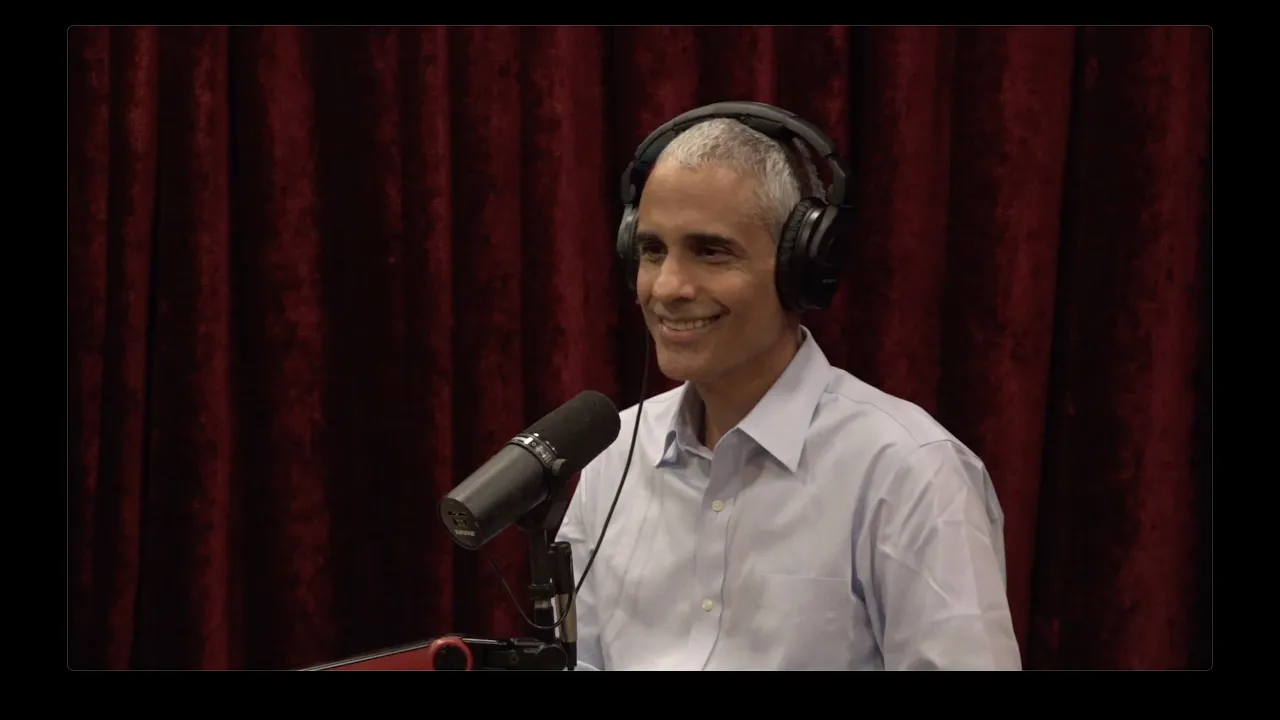
Joe Rogan Experience #2556 - Siddharth Kara
PowerfulJRE
10,548 views • 18 hours ago Save 130 min 11 min read
Video Summary
The conversation delves into the grim realities behind the technology we rely on, revealing that the cobalt and other minerals powering our smartphones, EVs, and AI data centers are extracted through child labor, slavery, and environmental devastation in the Congo. The speaker, who documented these conditions for his book "Cobalt Red," highlights the hypocrisy of Western nations prioritizing their environment while exploiting developing countries. He details how mining operations have decimated forests, contaminated water sources with toxic heavy metals, and displaced communities, forcing them into hazardous labor for survival. The report "Blood Batteries" quantified the environmental impact, showing significant forest loss and water pollution.
Further discussion explores the historical parallels with the Atlantic slave trade, emphasizing the deep-rooted greed and exploitation that fueled global economies. The speaker recounts the horrific conditions on slave ships, the brutal branding of enslaved people, and the moral compromises made for profit. He draws a direct line from past atrocities to present-day exploitation, arguing that true progress lies in extending compassion and responsibility beyond our immediate circles to address systemic injustices, whether in the Congo or historically through the slave trade.
Short Highlights
- Cobalt Extraction Fuels Technology: The minerals powering our modern devices, from smartphones to AI data centers, are sourced through exploitative practices in the Congo.
- Human Rights Abuses: Child labor, slave labor, and militia-run mines are rampant in the cobalt-rich regions of the Congo.
- Environmental Devastation: Mining operations have led to widespread deforestation, water contamination with heavy metals, and destruction of ecosystems.
- Historical Parallels: The current exploitation in the Congo echoes the brutality and greed of the Atlantic slave trade.
- Hypocrisy of Western Nations: Developed countries demand environmental protection at home but overlook or enable devastation abroad for technological advancement.
- The "Resource Curse": Regions rich in valuable minerals often suffer from conflict, corruption, and poverty due to external exploitation.
- Call for Compassion and Action: The speaker urges a reevaluation of personal consumption habits and a broader extension of compassion to those affected by the supply chain.
Key Details
The Human Cost of Technology [0:49]
- Joe Rogan thanks the guest for shedding light on the "cobalt stuff" in the Congo, acknowledging the danger the guest faced to get footage for his book "Cobalt Red."
- The guest expresses gratitude for Rogan's continued advocacy, noting their first conversation was nearly four years prior.
-
"The bottom of the chain is tainted in child labor, slavery, violence, environmental destruction and contamination."
The AI Data Center Fever [2:50]
- The demand for minerals like cobalt, lithium, nickel, and copper is driven not only by consumer electronics and EVs but also by the burgeoning AI economy.
- AI data centers require extensive use of these same metals for circuit boards, servers, heat sinks, and energy storage.
-
"And the new fever is the AI data centers. You know, we're building these as fast as possible to support the AI economy."
Global South Mineral Deposits [4:18]
- Rare earth minerals are predominantly found in the Global South, particularly in Central Africa, with lithium also extending to South America.
- North America has some deposits, but environmental concerns and processing challenges make extraction less viable compared to other regions.
-
"No, no, not much at all. No, that's why it's almost all in the global south and in particular in the heart of Africa, these deposits."
Environmental Catastrophe in the Congo [6:05]
- A report called "Blood Batteries" used satellite imagery to show significant forest loss (40-60%) in the Congo's copper-cobalt region by 2022.
- Water testing in the town of Koloise revealed heavy metal and acidity levels hundreds of times above WHO safety limits.
-
"So the whole water sources in that part of the country have been completely contaminated."
The Great Hypocrisy [9:00]
- Western nations object to environmental damage within their own borders but accept it in the Global South to maintain their technological lifestyles.
- This double standard is framed as the "great hypocrisy" of the current technological and energy transition.
-
"But it's okay for it to happen over there, kind of out of sight to those people. So long as we can plug in our phone, build out our data centers, uh, keep buying our EVs and so on."
Mitigating Mining's Impact [10:12]
- While deforestation is inevitable where deposits are found, better practices with containment and reforestation could mitigate damage.
- These standards are largely absent in the Global South, with Chinese state-run companies often prioritizing profit over environment and people.
-
"And none of that is done in the global South. None of that, none of that is done in Congo."
The Tainted Supply Chain [11:47]
- The entire supply chain for minerals is "tainted in misery, tainted in blood, tainted in environmental destruction."
- Even if alternatives like lithium iron phosphate batteries are used, new deposits in the Congo present similar horrific conditions.
-
"So when you say, all right, done with cobalt, we're just going to do lithium iron phosphate battery, or, you know, lithium table salt battery, whatever, same deal, same deal, you know."
The Resource Curse [15:50]
- The Congo's immense mineral wealth has attracted exploitation, leading to conflict and poverty, a phenomenon known as the "resource curse."
- Lack of alternatives forces people, including children, into dangerous mining work for survival.
-
"It's, it's the resource curse. It's, you know, when, when, when we find treasure somewhere, it attracts the pirates to come in and loot the place."
The Scale of Human Suffering [17:20]
- An estimated 300,000 people, including children, are digging for cobalt daily in the Congo.
- Approximately 37% of these workers are in conditions of absolute slavery, with nearly 10% being children.
-
"On, on any given day, there are at least 300,000 people, men, women, and children digging for cobalt with their bare hands and pickaxes and shovels, 300,000 people on any given day."
Personal Choices and Demand [20:25]
- Consumers are urged to reconsider upgrading devices annually, as this fuels demand for newly extracted minerals.
- The EV narrative of saving the planet is questioned if it comes at the cost of destroying another part of the planet.
-
"But we can't save our piece of the planet by destroying their piece of the planet."
Brake Dust and Particulate Pollution [22:40]
- EVs, while beneficial in some ways, produce heavier brake dust than conventional cars, contributing to urban air pollution.
- Carbon ceramic brakes can reduce this but are expensive and do not eliminate the issue entirely.
-
"All cars give off brake dust, just to be really clear, but EVs are heavier. They're heavier. They're, so you, you brake more."
The Historical Roots of Exploitation [28:30]
- The discussion shifts to the Atlantic slave trade, with the guest's book "Zorg" focusing on a pivotal slave ship.
- The slave trade, driven by the demand for sugar, birthed the first global economy and modern finance systems.
-
"And it's essential to know this history because it tells us why we are where we are at this point in history and as a moral or lack of uh moral species on this earth."
The Horrors of the Middle Passage [36:00]
- Schematics of slave ships like the "Brooks" show enslaved people packed into spaces as small as 16 inches, chained and lying down.
- Conditions were abysmal, with human waste, disease, and violence rampant during the months-long transatlantic journey.
-
"Each human is allotted 16 inches of space yeah that's right now why are they laying down okay so you're lining them all up filling up every available possible piece of space."
The "Zorg" Incident and Legal Precedent [43:30]
- The ship "Zorg" was captured by British pirates, and its cargo of enslaved Africans was sold in Jamaica.
- A subsequent insurance claim by the owner, William Gregson, led to a landmark legal case that revealed the atrocities of the slave trade.
-
"The case of the slaves is the same as if horses had been thrown overboard."
The Spark of Abolition [48:00]
- An anonymous letter questioning the lack of murder charges in the "Zorg" case ignited the abolitionist movement.
- Granville Sharp, a self-taught lawyer and abolitionist, used the case to argue for universal human rights.
-
"This was the ship that told the whole world what was happening in the slave trade and a small community of faith-based moral leaders said this is unacceptable."
The Power of Truth and Conscience [56:00]
- The "Zorg" trial, despite initial judgments favoring slave owners, exposed the moral bankruptcy of the slave trade.
- This event, fueled by investigative journalism and moral leaders, catalyzed the first movement to abolish slavery.
-
"Truth wins Joe it always wins and it may backslide and it may get suppressed and it may take time but truth wins."
The Legacy of Exploitation and Hope [1:04:00]
- The conversation revisits the Congo, emphasizing that even with recycling and new battery technologies, the damage done requires repair.
- The speaker argues that companies must invest in healing the environment and communities they've exploited, drawing parallels to colonial practices.
-
"You created a catastrophe a human rights and environmental catastrophe and there's some moral obligation to repair the damage you've done."
AI as a Potential Solution? [1:10:00]
- The possibility of AI managing resources equitably and preventing conflict is discussed as a futuristic, albeit potentially risky, solution.
- The current human-driven system, marked by greed and conflict, is contrasted with a hypothetical AI that prioritizes human life and resource distribution.
-
"My one hope of this complete dominance of technology that one day we're going to get to a position where there will genuinely be a thing more intelligent than human beings that don't allow this anymore."
The Moral Imperative for Change [1:20:00]
- Despite the overwhelming challenges, the speaker expresses hope that growing awareness and moral leaders will drive positive change.
- The conversation highlights the need for ethical frameworks and compassion to counter greed and exploitation.
-
"We have to find something has to something has to happen."
Technological Solutions and Human Responsibility [1:25:00]
- Robots and AI could potentially perform dangerous mining tasks more efficiently and safely.
- However, the focus must remain on caring for the displaced human populations and ensuring they are not "thrown overboard" like the enslaved Africans.
-
"Well we have to then yeah we have to look after the people who that's okay yeah what happens to the people what happened yeah we can't lose sight of them."
The Unseen Cost of Convenience [1:28:00]
- The speaker acknowledges that most people don't intentionally want to harm others but are caught in a system that forces toxic relationships with distant populations.
- The desire for modern conveniences like smartphones shouldn't come at the cost of environmental and human catastrophe elsewhere.
-
"This isn't another plus side of um of ai in that automation and uh specifically robots that are capable of doing very intricate things that mostly only human beings do will eventually be able to do a lot of the really dangerous that people do including probably extract these minerals in probably a way more efficient way."
Corporate Responsibility and Repair [1:30:00]
- Tech companies have the capacity to improve conditions in mines and repair environmental damage, even if it means reduced profits.
- Recycling is important, but it doesn't absolve companies of the responsibility to address the damage already done.
-
"You can't just leave behind an apocalypse so apple and the rest of them i'm not just picking on them it's all these companies have to still go back and repair and fix plant some trees clean up the water build some hospitals and schools and so on."
The Unseen Toll of Pollution [1:35:00]
- The severe acidity of water sources in mining areas poses a deadly threat, far exceeding safe levels.
- This contamination impacts drinking water, agriculture, and overall health, creating a lasting human catastrophe.
-
"The rivers and streams and well water around the villages came back in the fours and threes which is called hyper acidic it's deadly."
The Emergence of Moral Leadership [1:38:00]
- Despite the chaos and corruption, the speaker believes moral leaders will emerge, driven by growing awareness and a desire for change.
- Progress is slow and cyclical, but the recognition that the current path is unsustainable offers a glimmer of hope.
-
"There are there there is greatness among us it's possible it's possible even today even today with all the chaos those people are out there i i do believe that."
The Zorg's Legacy: Truth and Empathy [1:40:00]
- The "Zorg" trial and the subsequent abolitionist movement demonstrated the power of truth, empathy, and collective action.
- Even without modern communication, individuals extended their compassion to strangers, driving significant moral progress.
-
"They extended their hearts out to a people they knew were being oppressed but were fellow children of god and they fought for them."
A Hero's Work [1:44:00]
- The guest is praised as a hero for his work in exposing the realities of the Congo and the historical context of exploitation.
- His book and his willingness to share this difficult information are crucial for public awareness and potential change.
-
"You're a hero there's not a lot of heroes out there in the world but i think you really are one."

![Trump JUST Left the UN *Speechless* [Full Breakdown]](https://i.ytimg.com/vi/6EQqr-ua9FA/hqdefault.jpg)